

Keynote Speakers
Monday, 19 October 2026
Elisabetta Starnini
University of Pisa

Green Archaeometry for a Green Archaeology: A New Paradigm
The «green archaeometry» concept will be introduced as a new paradigm for a sustainable method of research in archaeology. Sustainable as aimed at providing the archaeologists with tools for recognizing the combination of the compositional, technological, and typological macroscopical markers, for identifying a specific production without destructive and expensive analyses, as in the case of ceramics. Moreover, in the spirit of «green archaeology» the aim is to recycle and reuse old samples for reanalysis, rather than resample for new analyses and to limit new sampling to the strict necessary. Archaeological deposits continue to be consumed all over the world and in some cases exhausted despite the awareness acquired over the years that excavation is a destructive operation, and that technological progress and scientific methodological advances instead provide us with increasingly less invasive investigation techniques. In many cases, new and groundbreaking information have been achieved simply restudying old collections of thin sections in the light of new knowledge and with new, holistic approaches. Some case-studies of green archaeometry for green archaeology will be illustrated.

Monday, 19 October 2026
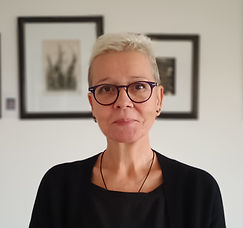
Jelena Živković & Vesna Bikić
University of Tübingen & Institute of Archaeology, Belgrade
Archaeology and Archaeometry in Dialogue:
Studies of Medieval and Early Modern Ceramics
in the Middle Danube Region
During the medieval and early modern periods, the Middle Danube was largely a frontier region that brought different social actors into cross-cultural exchange, as reflected in the ceramic record. While the complex dynamics of cultural continuity and discontinuity have long been recognized in archaeology, the integration of archaeometric approaches into ceramic studies has significantly improved our understanding of the mechanisms underlying these processes.
Research on the transmission of technological knowledge demonstrates the strong impact of political change on local craftsmanship. In Belgrade, the Ottoman conquest in 1521 marked the beginning of new production practices that differed from those of the period of Hungarian rule across all segments of the chaîne opératoire, as demonstrated by petrographic and chemical analyses of ceramics.
New data on ceramic production technologies along the Danube, Sava, and Drava rivers indicate the formation of two technological traditions that emerged in the Middle Danube Region during the Ottoman period. The first concerns the production of tableware and storage vessels formed by wheel-throwing, both glazed and unglazed, typical of Ottoman urban centres. The second tradition centres on pottery formed by hand and hand-turning wheel that was used for cooking and baking. Archaeological criteria indicate consistency in the use of functional vessel classes, as well as uniformity in vessel profiles within each class across the region. Provenance studies and the reconstruction of ceramic, slip, and glaze production technologies reveal the exchange of knowledge among multiple workshops within both technological traditions of the Middle Danube region. These emerging networks of knowledge exchange illustrate connectivity between socially diverse communities shaped by migrations and warfare on the frontier.
Tuesday, 20 October 2026
Christina Papageorgopoulou
Democritus University of Thrace
Resilient Cities, Fragile Lives:
Diversity, Crisis, and Survival in Ancient Thessaloniki

CityLife is an ERC-funded project that investigates, from a bioarchaeological perspective, how past populations adapted to urban environments and developed resilience to the inherent challenges of urban life. By analyzing human skeletal remains, the project examines the role of biological factors in the durability and sustainability of pre-industrial urban societies. The research focuses on Thessaloniki, a major European urban center that provides a unique opportunity to study urban life diachronically from 300 BC to AD 1500. CityLife explores key aspects of past societies, including living conditions, economic structures, population dynamics, pathogen load, and immune responses.
This presentation highlights the use of ancient DNA analysis to investigate how trade, migration, and exogamous marriage practices contributed to increased genetic diversity at the population level in urban environments. At the same time, the formation of social, religious, and neighborhood-based subgroups may have promoted endogamy, reducing genetic diversity within those communities. In parallel, stable isotope analysis, skeletal stress markers and innovative computational tools are used to assess the resilience and sustainability of urban food systems. These approaches help determine how such systems responded to crises and long-term transformations, as well as how population growth and socioeconomic disruptions affected their efficiency.
Preliminary genetic results confirm the diverse and multicultural character of Thessaloniki’s population. Demographic evidence points to cycles of prosperity and growth, interrupted by periods of significant stress. Indicators of developmental stress, disease, and mortality—especially among infants and children—suggest that urban life posed substantial challenges from an early age. Ongoing research explores hypotheses related to food inequality, religious dietary restrictions, and shifts in diet before and after major conflicts, epidemics, and periods of social instability.
Tuesday, 20 October 2026

László Bartosiewicz
Stockholm University
Navigating between disciplines: the Bökönyi centenary
Sándor Bökönyi, the founder of modern archaeozoology in Hungary, was born in 1926. Holding a degree in veterinary science, he devoted his entire life to archaeological research. Through his investigations in the Balkans and Southwest Asia, he achieved results of international importance in elucidating past animal-human relationships. Notably, he was one of the few, whose approach was truly interdisciplinary in Hungarian archaeology at the time. He played a prominent role in representing archaeology at the level of the Hungarian Academy of Sciences. A generation’s time has passed since his untimely death. It is therefore instructive to review the current state of archaeozoology in light of his career and the perspectives of archaeozoological research in Hungarian archaeology.
Wednesday, 21 October 2026
Austrian Archaeological Institute of the Austrian Academy of Sciences, Vienna
From Raw Materials to Color:
Archaeometric Perspectives on Pigment Production and Trade

Color played a central role in the ancient world, not only as an aesthetic choice but as material expression shaped by resource availability and technological knowledge. Vibrant palettes drew on a wide range of mineral pigments from naturally occurring materials requiring minimal processing —such as ochre and cinnabar—to complex, multicomponent materials produced through high-temperature technologies such as Egyptian blue. Ancient texts emphasize that material quality and provenance mattered, yet the origins of these materials or where they were processed remain poorly understood. Some pigments derived from rare resources and appear sparingly in the archaeological record, while others made from more accessible raw materials were widely used and possibly circulated far.
This keynote presents new insights from the ERC-funded project Color in a New Light, which situates pigments within broader frameworks of production, trade, and cultural interaction. Despite their importance, pigments remain understudied compared to materials such as metals: pigment provenance research still needs robust methodologies and comprehensive reference databases. As a result, interpretations of pigment origins and circulation remain challenging.
Focusing on Egyptian blue as a key case study, this keynote traces shifts in supply networks and explores the potential reorganization of pigment industries in the 1st century BCE. Produced in high-temperature workshops from calcium-, silica-, and copper-based compounds with added flux, Egyptian blue exemplifies the intersection of technological knowledge and resource procurement. Its manufacture appears closely linked to glass and metal production, suggesting shared workshops and overlapping trade networks. However, only a few production centers have been identified, and provenance studies remain scarce. The limited data available point to the use of distant copper sources, underscoring the complexity of these supply systems. By reconstructing pigment production and trade, this research sheds new light on ancient connectivity and contributes to a more nuanced understanding of technological and economic organization.
Wednesday, 21 October 2026

Vania Virgili
European Research Infrastructure
for Heritage Science, E-RIHS ERIC
Florence, Italy
From instruments to interpretation:
the new challenges of heritage science
Instruments produce measurements. Research questions require interpretation. Between the two lies the contribution of heritage science, and its challenges: complex research questions no single technique can answer, data that must stay usable long after a project ends, and research that crosses disciplinary and national boundaries.
E-RIHS ERIC, the European Research Infrastructure for Heritage Science (www.e-rihs.eu), brings together expertise and capabilities across Europe. Through four platforms – ARCHLAB, FIXLAB, MOLAB and DIGILAB – it provides access to state-of-the-art facilities, instruments, archives, collections and digital resources. Researchers can combine them, designing investigations around the research question rather than the capabilities of a single laboratory. This matters in archaeometry, where complementary analytical approaches reveal different aspects of an artefact's materials, manufacture and history. The HS Academy adds doctoral schools, training camps and webinars.
Heritage science is asked today for more efficient methods to interpret heritage in its cultural contexts, and stronger capacity to respond to climate and human-induced pressures. Growing, heterogeneous data change how knowledge is created, while AI opens new possibilities and raises questions of quality, reliability and ethics. The E-RIHS Scientific Strategy 2026–2030 answers in four pillars: scientific and technological advancement for emerging needs; data-driven research within the European digital ecosystem; balanced access, training and community engagement; and enlargement and operational excellence.
In archaeometry, connecting measurement to interpretation is not new: it is integral to the field. What changes is the scale at which it becomes possible, and the degree to which national strengths can become shared European capacity. E-RIHS provides a framework for working at that scale, shaped by those who use it, provide services through it and partner in its development.